Seeding pines in the Mediterranean region
DOI:
https://doi.org/10.21750/REFOR.21.02.132Keywords:
forest restoration, direct seeding, Pinus spp., precision restoration, seeding drones, seed coatingAbstract
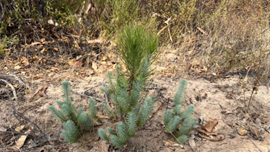
Extensive disturbance to the ecologically, socially, and economically important pine (Pinus spp. L.) forests of the Mediterranean region has created a strong need for forest restoration throughout the region. Seeding could potentially be a viable option for regenerating some of the 10 pine species that occur in the region, especially the fire-adapted serotinous species, but previous seeding efforts have been marked with inconsistent success. From our synthesis of available literature and practical experience, we briefly summarize the history of applied trials and pine seeding research, examine the factors that determine pine seeding success, and discuss what we have learned that can make seeding an ecologically and economically viable approach to pine forest establishment in the Mediterranean region. Future refinement of autonomous drones for seed delivery, selection of favorable sowing microsites, and improvement of seed coating technologies that minimize seed predation and support seedling establishment will support “precision restoration” practices that promise to advance pine seeding to an operational scale in the Mediterranean region.
Downloads
References
AEMA (2008) Agencia Europea de Medio Ambiente. Tipología de bosques europeos. https://www.miteco.gob.es/content/dam/miteco/es/calidad-y-evaluacion-ambiental/publicaciones/TipologiaBosquesEuropeos_tcm30-185660.pdf (last accessed 23 November 2024).
Amirkhani M, Mayton H, Loos M, Taylor A (2023) Development of superabsorbent polymer (SAP) seed coating technology to enhance germination and stand establishment in red clover cover crop. Agronomy 13(2):438. https://doi.org/10.3390/agronomy13020438 DOI: https://doi.org/10.3390/agronomy13020438
Benkman CW (1995) Wind dispersal capacity of pine seeds and the evolution of different seed dispersal modes in pines. Oikos 73:221–224. https://doi.org/10.2307/3545911 DOI: https://doi.org/10.2307/3545911
Bladé C, Vallejo R (2008) Seed mass effects on performance of Pinus halepensis Mill. seedlings sown after fire. For Ecol Manag 255:2362–2372. https://doi.org/10.1016/j.foreco.2007.12.039 DOI: https://doi.org/10.1016/j.foreco.2007.12.039
Boulant N, Navas ML, Corcket E, Lepart J (2008) Habitat amelioration and associational defence as main facilitative mechanisms in Mediterranean grasslands grazed by domestic livestock. Écoscience 15:407–415. https://doi.org/10.2980/15-3-3126 DOI: https://doi.org/10.2980/15-3-3126
Boydak, M (2004) Silvicultural characteristics and natural regeneration of Pinus brutia Ten.—a review. Plant Ecol 171:153–163. DOI: https://doi.org/10.1023/B:VEGE.0000029373.54545.d2
Calvo L, Torres O, Valbuena L, Luis-Calabuig E (2013) Recruitment and early growth of Pinus pinaster seedlings over five years after a wildfire in NW Spain. For Syst 22(3):582–586. http://dx.doi.org/10.5424/fs/2013223-04623 DOI: https://doi.org/10.5424/fs/2013223-04623
Castro J (2021) Chapter 25 - Post-fire restoration of Mediterranean pine forests. In: Ne’eman G, Osem Y (eds) Pines and their mixed forest ecosystems in the Mediterranean Basin. Springer Nature Switzerland AG, Cham, Switzerland, pp 537–565. https://doi.org/10.1007/978-3-030-63625-8 DOI: https://doi.org/10.1007/978-3-030-63625-8_25
Castro J, Gómez JM, García D, Zamora R, Hódar JA (1999) Seed predation and dispersal in relict Scots pine forests in southern Spain. Plant Ecol 145:115–123. https://doi.org/10.1023/A:1009865703906 DOI: https://doi.org/10.1023/A:1009865703906
Castro J, Zamora R, Hódar J (2002a) Mechanisms blocking Pinus sylvestris colonization of Mediterranean mountains meadows. J Veg Sci 13:725–731. https://doi.org/10.1111/j.1654-1103.2002.tb02100.x DOI: https://doi.org/10.1111/j.1654-1103.2002.tb02100.x
Castro J, Zamora R, Hódar JA, Gómez JM (2002b) Use of shrubs as nurse plants: a new technique for reforestation in Mediterranean mountains. Restor Ecol 10:297–305. https://doi.org/10.1046/j.1526-100X.2002.01022.x DOI: https://doi.org/10.1046/j.1526-100X.2002.01022.x
Castro J, Zamora R, Hódar J A, Gómez J M (2004) Seedling establishment of a boreal tree species (Pinus sylvestris) at its southernmost distribution limit: consequences of being in a marginal Mediterranean habitat. J Ecol 92(2):266–277. https://doi.org/10.1111/j.0022-0477.2004.00870.x DOI: https://doi.org/10.1111/j.0022-0477.2004.00870.x
Castro J, Zamora R, Hódar J A, Gómez J M (2005) Alleviation of summer drought boosts establishment success of Pinus sylvestris in a Mediterranean mountain: An experimental approach. Plant Ecol 181:191–202. https://doi.org/10.1007/s11258-005-6626-5 DOI: https://doi.org/10.1007/s11258-005-6626-5
Castro J, Leverkus AB (2019) Effect of herbaceous layer interference on the post-fire regeneration of a serotinous pine (Pinus pinaster Aiton) across two seedling ages. Forests 10:74. https://doi.org/10.3390/f10010074 DOI: https://doi.org/10.3390/f10010074
Castro J, Morales-Rueda F, Navarro FB, Löf M, Vacchiano G, Alcaraz-Segura D (2021) Precision restoration: a necessary approach to foster forest recovery in the 21st century. Restor Ecol 29(7):e13421. https://doi.org/10.1111/rec.13421 DOI: https://doi.org/10.1111/rec.13421
Castro J, Alcaraz-Segura D, Baltzer JL, Amorós L, Morales-Rueda F, Tabik S (2024) Automated precise seeding with drones and artificial intelligence: a workflow. Restor Ecol 32(5):e14164. https://doi.org/10.1111/rec.14164 DOI: https://doi.org/10.1111/rec.14164
Cueto M (2001) Ordenaciones de pinares de pino piñonero en la provincia de Cádiz. Cuadernos de la Sociedad Española de Ciencias Forestales 11:125–134.
Davies KW, Clenet DR, Madsen MD, Brown VS, Ritchie AL, Svejcar LN (2024) Activated carbon seed technologies: Innovative solutions to assist in the restoration and revegetation of invaded drylands. J Environ Manag 371:123281. https://doi.org/10.1016/j.jenvman.2024.123281 DOI: https://doi.org/10.1016/j.jenvman.2024.123281
Domaradzki M, Kaniewska J, Weiner W (2012) The application of agglomerative granulation for seeds. Part 2. Pelleting of organic seeds. Chemik 66:473–478.
Espelta JM, Retana J, Habrouk A (2003) An economic and ecological multi-criteria evaluation of reforestation methods to recover burned Pinus nigra forests in NE Spain. For Ecol Manag 180:185–198. https://doi.org/10.1016/S0378-1127(02)00599-6 DOI: https://doi.org/10.1016/S0378-1127(02)00599-6
Evenari M, Shanan L, Tadmor N (1971) The Negev, the Challenge of a Desert. Harvard University Press, Cambridge, MA, USA.
Fernandes P, Máguas C, Correia O (2017) Combined effects of climate, habitat, and disturbance on seedling establishment of Pinus pinaster and Eucalyptus globulus. Plant Ecol 218(5):501–515. https://doi.org/10.1007/s11258-017-0706-1 DOI: https://doi.org/10.1007/s11258-017-0706-1
Franco JDA (1986) Pinus. In: Castroviejo S, Laínz M, López-González G, Montserrat P, Muñoz-Garmendia F, Paiva J, Villar L (eds) Flora Ibérica, vol. I. Real Jardín Botánico, CSIC, Madrid, Spain, pp 168–174.
García-Morote FA, Martínez-García E, Andrés-Abellán M, Caballero ER, Miettinen H, López-Serrano FR (2017) Direct seeding of Pinus halepensis Mill. for recovery of burned semi-arid forests: Implications for post-fire management for improving natural regeneration. Forests 8(9):353. https://doi.org/10.3390/f8090353 DOI: https://doi.org/10.3390/f8090353
Grivet D, Olsson S (2021) Chapter 1 - Phylogenies and evolution of Mediterranean pines. In: Ne’eman G, Osem Y (eds) Pines and their mixed forest ecosystems in the Mediterranean Basin. Springer Nature Switzerland AG, Cham, Switzerland, pp 3–17. https://doi.org/10.1007/978-3-030-63625-8 DOI: https://doi.org/10.1007/978-3-030-63625-8_1
Hibsher N, Moshe Y, Bney-Moshe E, Ben-Moshe E, Zangi E, Zuck A, Osem Y (2013) Post-fire regeneration in Mediterranean reforested sites as affected by mechanical site preparation—lessons for restoration. Appl Veg Sci 16:629–639. https://doi.org/10.1111/avsc.12030 DOI: https://doi.org/10.1111/avsc.12030
Jonas JL, Berryman E, Wolk B, Morgan P, Robichaud PR (2019) Post-fire wood mulch for reducing erosion potential increases tree seedlings with few impacts on understory plants and soil nitrogen. For Ecol Manag 453:117567. https://doi.org/10.1016/j.foreco.2019.117567 DOI: https://doi.org/10.1016/j.foreco.2019.117567
Larson AJS, Cartwright MM, Jones WD, Luce K, Chen M-Y, Petersen K, Nelson SV, Michaelis DJ, Madsen MD (2023) Slow release of GA3 hormone from polymer coating overcomes seed dormancy and improves germination. Plants 12(24):4139. https://doi.org/10.3390/plants12244139 DOI: https://doi.org/10.3390/plants12244139
Lázaro-González A, Andivia E, Hampe A, Hasegawa S, Marzano R, Santos AMC, Castro J, Leverkus AB (2023) Revegetation through seeding or planting: A worldwide systematic map. J Environ Manag 337:117713. https://doi.org/10.1016/j.jenvman.2023.117713 DOI: https://doi.org/10.1016/j.jenvman.2023.117713
Lucas-Borja ME, Silva-Santos P, Fonseca TF, Tíscar-Oliver PA, López-Serrano FR, Andrés-Abellán M, Martínez-García E, del Cerro-Barja A (2010) Modelling Spanish black pine postdispersal seed predation in Central-eastern Spain. For Syst 19(3):393–403. DOI: https://doi.org/10.5424/fs/2010193-9104
Lucas-Borja ME, Plaza-Álvarez PA, González-Romero J, Miralles I, Sagra J, Molina-Peña E, Mora D, de las Heras J, Fernández C (2020) Post-wildfire straw mulching and salvage logging affects initial pine seedling density and growth in two Mediterranean contrasting climatic areas in Spain. For Ecol Manag 474:118363. https://doi.org/10.1016/j.foreco.2020.118363 DOI: https://doi.org/10.1016/j.foreco.2020.118363
Martínez-García E, Miettinen H, Rubio E, García-Morote FA, Andrés-Abellán M, López-Serrano FR (2018) Effects of post-fire management practices and slope-aspect on medium-term Spanish black pine regeneration: implications of using a direct seeding strategy in burnt areas. European J For Res 137(4):527–540. https://doi.org/10.1007/s10342-018-1121-4 DOI: https://doi.org/10.1007/s10342-018-1121-4
Matías L, Castro J, Villar-Salvador P, Quero JL, Jump AS (2017) Differential impact of hotter drought on seedling performance of five ecologically distinct pine species. Plant Ecol 218:201–212. https://doi.org/10.1007/s11258-016-0677-7 DOI: https://doi.org/10.1007/s11258-016-0677-7
Matías L, Zamora R, Castro J (2012) Sporadic rainy events are more critical than increasing of drought intensity for woody species recruitment in a Mediterranean community. Oecologia 169:833–844. https://doi.org/10.1007/s00442-011-2234-3 DOI: https://doi.org/10.1007/s00442-011-2234-3
Mendoza I, Zamora R, Castro J (2009) A seeding experiment for testing tree-community recruitment under variable environments: implications for forest regeneration and conservation in Mediterranean habitats. Biol Conserv 149:1491–1499. https://doi.org/10.1016/j.biocon.2009.02.018 DOI: https://doi.org/10.1016/j.biocon.2009.02.018
Mohan M, Richardson G, Gopan G, Aghai MM, Bajaj S, Galgamuwa GA, Vastaranta M, Arachchige PSP, Amorós L, Corte APD, de-Miguel S, Leite RV, Kganyago M, Broadbent EN, Doaemo W, Shorab MAB, Cardil A (2021) UAV-supported forest regeneration: current trends, challenges and implications. Remote Sens 13(13):2596. https://doi.org/10.3390/rs13132596 DOI: https://doi.org/10.3390/rs13132596
Moreira F, Arianoutsou M, Corona P, De las Heras J (eds) (2012) Post-fire management and restoration of southern European forests. Springer, Dordrecht, The Netherlands. DOI: https://doi.org/10.1007/978-94-007-2208-8
Muler AL, van Etten EJB, Stock WD, Howard K, Froend RH (2018) Can hydraulically redistributed water assist surrounding seedlings during summer drought? Oecologia 187:625–641. https://doi.org/10.1007/s00442-018-4158-7 DOI: https://doi.org/10.1007/s00442-018-4158-7
Nakhoul J, Santonja M, Fernandez C, Greff S, Bousquet-Mélou A, Dupouyet S, Nemer N, Kattar S, Abboud J, Prévosto B (2020) Soil scarification favors natural regeneration of Pinus pinea in Lebanon forests: Evidences from field and laboratory experiments. For Ecol Manag 459:117840. https://doi.org/10.1016/j.foreco.2019.117840 DOI: https://doi.org/10.1016/j.foreco.2019.117840
Ne’eman G, Osem Y (eds) (2021) Pines and their mixed forest ecosystems in the Mediterranean Basin. Springer Nature Switzerland AG, Cham, Switzerland. DOI: https://doi.org/10.1007/978-3-030-63625-8
Nolte DL, Barnett JP (2000) A repellent to reduce mouse damage to longleaf pine seed. Int Biodeterior Biodegrad 45:169–174. https://doi.org/10.1016/S0964-8305(00)00060-3 DOI: https://doi.org/10.1016/S0964-8305(00)00060-3
Notivol E, Oliet JA, Serrada R (2012) Pinus uncinata Ram. In: Pemán JG, Navarro RM, Nicolás JL, Prada MA, Serrada R (eds), Producción y Manejo de Semillas y Plantas Forestales. Ministerio de Agricultura, Alimentación y Medio Ambiente, Madrid, Spain, pp 1003–1018.
Ordóñez JL, Franco S, Retana J (2004) Limitation of the recruitment of Pinus nigra in a gradient of post-fire environmental conditions. Écoscience 11:296–304. https://doi.org/10.1080/11956860.2004.11682836 DOI: https://doi.org/10.1080/11956860.2004.11682836
Pawlina IM, Proulx G (1996) Study of house sparrow (Passer domesticus) feeding preference to natural color and guard coat blue coated seeds. Crop Prot 15:143–146. https://doi.org/10.1016/0261-2194(95)00087-9 DOI: https://doi.org/10.1016/0261-2194(95)00087-9
Pearson DE, Valliant M, Carlson C, Thelen GC, Ortega YK, Orrock JL, Madsen MD (2019) Spicing up restoration: can chili peppers improve restoration seeding by reducing seed predation? Restor Ecol 27:254–260. https://doi.org/10.1111/rec.12862 DOI: https://doi.org/10.1111/rec.12862
Pedrini S, Merritt DJ, Stevens J, Dixon K (2017) Seed coating: Science or marketing spin? Trends Plant Sci 22:106–116. https://doi.org/10.1016/j.tplants.2016.11.002 DOI: https://doi.org/10.1016/j.tplants.2016.11.002
Pedrini S, Balestrazzi A, Madsen MD, Bhalsing K, Hardegree SP, Dixon KW, Kildisheva OA (2020) Seed enhancement: getting seeds restoration‐ready. Restor Ecol 28(S3):266–275. https://doi.org/10.1111/rec.13184 DOI: https://doi.org/10.1111/rec.13184
Pedrini S, Stevens JC, Dixon KW (2021) Seed encrusting with salicylic acid: A novel approach to improve establishment of grass species in ecological restoration. PLOS ONE 16:e0242035. https://doi.org/10.1371/journal.pone.0242035 DOI: https://doi.org/10.1371/journal.pone.0242035
Petrou P, Milios E (2012) Establishment and survival of Pinus brutia Ten. seedlings over the first growing season in abandoned fields in central Cyprus. Plant Biosyst 146:522–533. https://doi.org/10.1080/11263504.2011.633574 DOI: https://doi.org/10.1080/11263504.2011.633574
Rautio P, Hallikainen V, Valkonen S, Karjalainen J, Puttonen P, Bergsten U, Winsa H, Hyppönen M (2023) Manipulating overstory density and mineral soil exposure for optimal natural regeneration of Scots pine. For Ecol Manag 539:120996. https://doi.org/10.1016/j.foreco.2023.120996 DOI: https://doi.org/10.1016/j.foreco.2023.120996
Retana J, Arnan X, Arianoutsou M, Barbati A, Kazanis D, Rodrigo A (2012) Chapter 7 - Post-fire management of non-serotinous pine forests. In: Moreira F, Arianoutsou M, Corona P, De las Heras J (eds) Post-fire management and restoration of southern European forests. Springer, Dordrecht, The Netherlands, pp 151–170. DOI: https://doi.org/10.1007/978-94-007-2208-8_7
Ruano I, Pando V, Bravo F (2009) How do light and water influence Pinus pinaster Ait. germination and early development? For Ecol Manag 258:2647–2653. https://doi.org/10.1016/j.foreco.2009.09.027 DOI: https://doi.org/10.1016/j.foreco.2009.09.027
Rundel PW, Arroyo MT, Cowling RM, Keeley JE, Lamont BB, Vargas P (2016) Mediterranean biomes: Evolution of their vegetation, floras, and climate. Annu Rev Ecol Evol Syst 47(1):383–407. https://doi.org/10.1146/annurev-ecolsys-121415-032330 DOI: https://doi.org/10.1146/annurev-ecolsys-121415-032330
Salazar-Tortosa D, Castro J, de Casas RR, Viñegla B, Sánchez-Cañete EP, Villar-Salvador P (2018a) Gas exchange at whole plant level shows that a less conservative water use is linked to a higher performance in three ecologically distinct pine species. Environ Res Lett 13:045004. https://doi.org/10.1088/1748-9326/aab18f DOI: https://doi.org/10.1088/1748-9326/aab18f
Salazar-Tortosa D, Castro J, Villar-Salvador P, Viñegla B, Matías L, Michelsen A, de Casas RR, Querejeta I (2018b) The “isohydric trap”: a proposed feed-back between water shortage, stomatal regulation and nutrient acquisition drives differential growth and survival of European pines under climatic dryness. Glob Chang Biol 24:4069–4083. https://doi.org/10.1111/gcb.14311 DOI: https://doi.org/10.1111/gcb.14311
Salazar-Tortosa D, Castro J, Saladin B, Zimmermann NE, Rubio de Casas R (2020) Arid environments select for larger seeds in pines (Pinus spp). Evol Ecol 34:11–26. https://doi.org/10.1007/s10682-019-10016-1 DOI: https://doi.org/10.1007/s10682-019-10016-1
Salazar-Tortosa D, Saladin B, Castro J, Rubio de Casas R (2024) Climate change is predicted to impact the global distribution and richness of pines (genus Pinus) by 2070. Divers Distrib 30(7):e13849. https://doi.org/10.1111/ddi.13849 DOI: https://doi.org/10.1111/ddi.13849
San-Miguel-Ayanz J, de Rigo D, Caudullo G, Houston Durrant T, Mauri A (Eds) (2016) European atlas of forest tree species. Publication Office of the European Union, Luxembourg. https://doi.org/10.2788/038466
Scott JM (1989) Seed coatings and treatments and their effects on plant establishment. Adv Agron 42:43–83. https://doi.org/10.1016/S0065-2113(08)60523-4 DOI: https://doi.org/10.1016/S0065-2113(08)60523-4
Taboada A, Tárrega R, Marcos E, Valbuena L, Suárez-Seoane S, Calvo L (2017) Fire recurrence and emergency post-fire management influence seedling recruitment and growth by altering plant interactions in fire-prone ecosystems. For Ecol Manag 402:63–75. https://doi.org/10.1016/j.foreco.2017.07.029 DOI: https://doi.org/10.1016/j.foreco.2017.07.029
Taylor JB, Cass KL, Armond DN, Madsen MD, Pearson DE, St Clair SB (2020) Deterring rodent seed‐predation using seed‐coating technologies. Restor Ecol 28:927–936. https://doi.org/10.1111/rec.13158 DOI: https://doi.org/10.1111/rec.13158
Tíscar PA, Candel-Pérez D, Estrany J, Balandier P, Gómez R, Lucas-Borja ME (2017) Regeneration of three pine species in a Mediterranean forest: A study to test predictions from species distribution models under changing climates. Sci Total Environ 584–585:78–87. https://doi.org/10.1016/j.scitotenv.2017.01.150 DOI: https://doi.org/10.1016/j.scitotenv.2017.01.150
Tromble JM (1987) Water interception by two arid land shrubs. J Arid Environ 15:65–70. https://doi.org/10.1016/S0140-1963(18)31005-X DOI: https://doi.org/10.1016/S0140-1963(18)31005-X
Whyte S (2003) Revegetation techniques - a guide for establishing native vegetation in Victoria. Greening Australia Victoria, Victoria, Australia.
Ziffer-Berger J, Weisberg PJ, Cablk ME, Moshe Y, Osem Y (2017) Shrubs facilitate pine colonization by controlling seed predation in dry Mediterranean dwarf shrublands. J Arid Environ 147:34–39. https://doi.org/10.1016/j.jaridenv.2017.07.012 DOI: https://doi.org/10.1016/j.jaridenv.2017.07.012
Downloads
Published
Issue
Section
License

This work is licensed under a Creative Commons Attribution 4.0 International License.
Authors who publish with this journal agree to the following terms:
- Authors retain copyright and grant the journal right of first publication with the work simultaneously licensed under a Creative Commons Attribution License CCBY that allows others to share the work with an acknowledgement of the work's authorship and initial publication in this journal.
- Authors are able to enter into separate, additional contractual arrangements for the non-exclusive distribution of the journal's published version of the work (e.g., post it to an institutional repository or publish it in a book), with an acknowledgement of its initial publication in this journal.
- Authors are permitted and encouraged to post their work online (e.g., in institutional repositories or on their website) prior to and during the submission process, as it can lead to productive exchanges, as well as earlier and greater citation of published work (See The Effect of Open Access).
How to Cite