No. 21 (2025): Special issue on International Practices for Regenerating and Restoring Forest Trees by Seeding

Emile S. Gardiner, USDA Forest Service, Southern Research Station, Center for Bottomland Hardwoods Research, Stoneville, MS, USA


John A. Stanturf, Institute of Forestry and Rural Engineering, Estonian University of Life Sciences, Tartu, Estonia and InNovaSilva, Vejle, Denmark


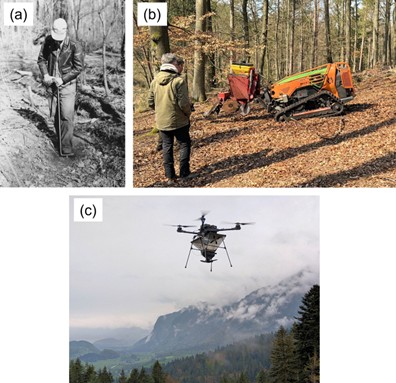
This Special Issue of Reforesta, International Practices for Regenerating and Restoring Forest Trees by Seeding, brings together regional practice and research from North America, South America, Europe, Asia, and Oceania on using broadcast and direct seeding to create forest cover. It presents a significant range of seeding activities inclusive of species, forests, sites, and climates. Seeding has regained interest because of its scalability and cost-effectiveness, particularly for remote or inaccessible areas, sites with low productivity where planting seedling costs are prohibitive, or when aiming for a more natural forest structure. Technological innovations, particularly in seed treatments, automation, and precision seeding improve success of large-scale seed dispersal.
Published: 2026-01-22

Special issue on International Practices for Regenerating and Restoring Forest Trees by Seeding

  • International practices for regenerating and restoring forest trees by seeding – an introduction

    Emile S. Gardiner, John A. Stanturf
    1-9
    DOI: https://doi.org/10.21750/REFOR.21.01.131
  • Seeding pines in the Mediterranean region

    Jorge Castro, María Pérez-García, Harrie Lovenstein, Simone Pedrini
    10-31
    DOI: https://doi.org/10.21750/REFOR.21.02.132
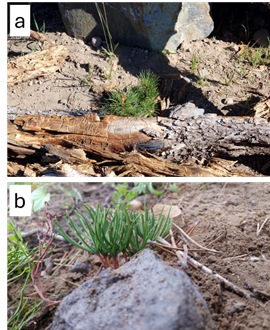
  • Seeding of whitebark pine (Pinus albicaulis) in western north American subalpine forests: Development and application

    Elizabeth R. Pansing, Diana F. Tomback
    32-53
    DOI: https://doi.org/10.21750/REFOR.21.03.133
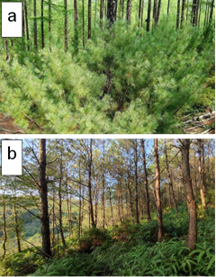
  • Pinus massoniana seeding practices for forest restoration in China

    FangChao Wang, Qiao Liu, Fusheng Chen, G.Geoff Wang
    54-67
    DOI: https://doi.org/10.21750/REFOR.21.04.134
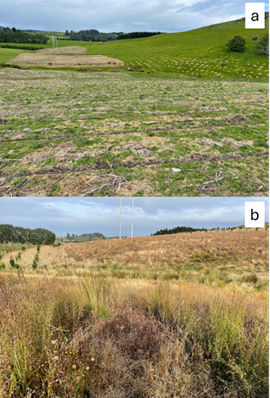
  • Seeding for native afforestation in the temperate New Zealand forests

    Janice M. Lord, Kate C. Moss-Mason
    68-86
    DOI: https://doi.org/10.21750/REFOR.21.05.135
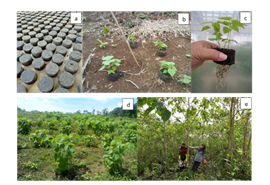
  • Seeding of tropical tree species in Indonesia

    Dede J. Sudrajat, Yulianti, Evayusvita Rustam
    87-104
    DOI: https://doi.org/10.21750/REFOR.21.06.136
  • An overview of seeding methods to restore tropical forests of Brazil

    Vera Lex Engel, Diego Cerveira de Souza, John A. Parrotta
    105-145
    DOI: https://doi.org/10.21750/REFOR.21.07.137
  • Seeding acorns for montane cloud forest restoration in central Veracruz, Mexico: practical experiences

    Fabiola López-Barrera, María de los Ángeles García-Hernández
    146-165
    DOI: https://doi.org/10.21750/REFOR.21.08.138
  • Seeding bottomland oaks (Quercus spp.) in the southern United States

    Emile S. Gardiner, John A. Stanturf
    166-189
    DOI: https://doi.org/10.21750/REFOR.21.09.139
  • Seeding of oak in southern Sweden

    Magnus Löf, Benjamin Miles, Kyaw Thu Moe, Nora S. Pohl, Dr. Leonie Schönbeck
    190-198
    DOI: https://doi.org/10.21750/REFOR.21.10.140
  • Seeding to establish Ravni Srem oak forests, Northern Serbia

    Vladan Ivetić, Marko Marinković
    199-207
    DOI: https://doi.org/10.21750/REFOR.21.11.141
  • Seeding forest trees

    John A. Stanturf, Emile S. Gardiner
    208-224
    DOI: https://doi.org/10.21750/REFOR.21.12.142